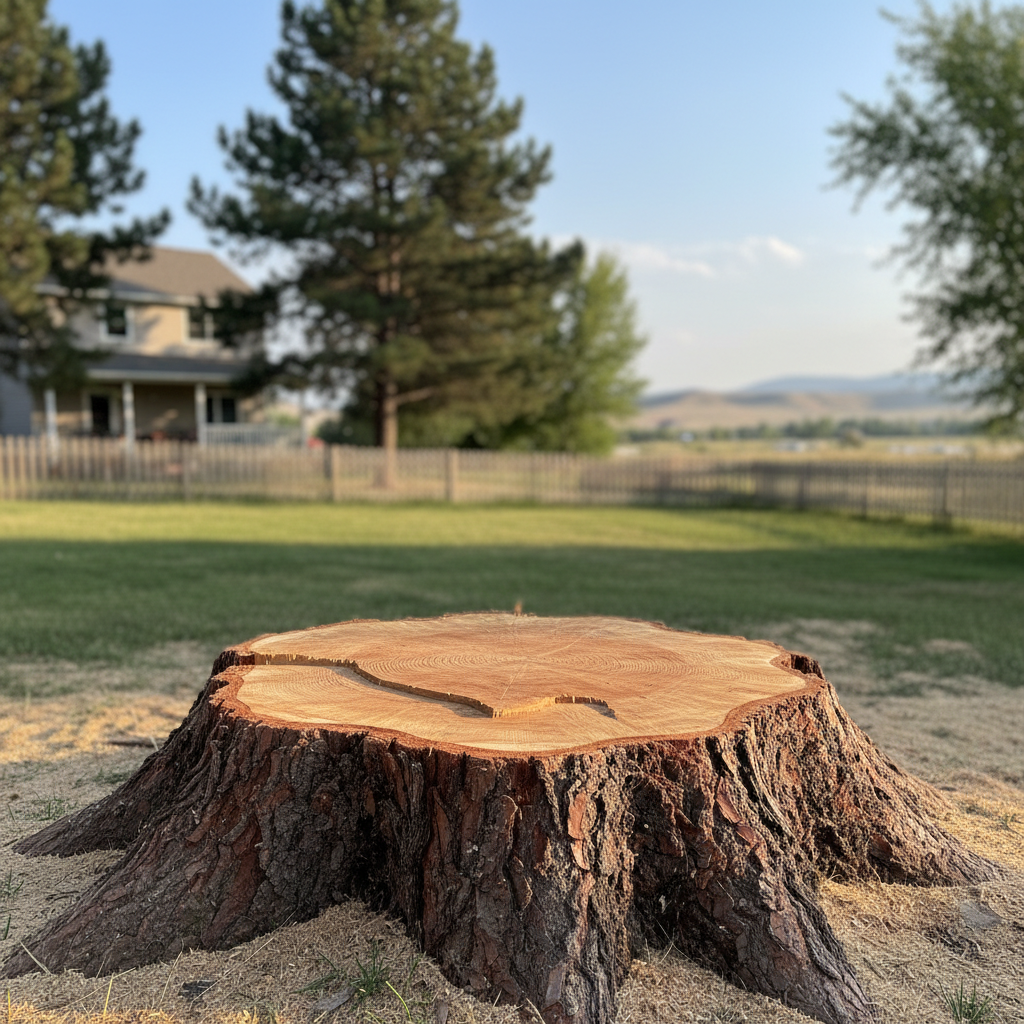
Got a tree in your yard that's seen better days? Maybe it's leaning a little too close to the house, or it just didn't survive that last big winter storm we had. Whatever the reason, you're probably thinking about getting it removed. The big question I hear a lot is, "Can I just do this myself?"
Well, let's talk about it. Tree removal isn't like pruning a rose bush. It can be dangerous, complicated, and if you mess it up, it can cost you a whole lot more than hiring someone in the first place.
Before You Even Think About Cutting
First off, assess the situation. Really look at that tree. Is it small enough that you could comfortably reach the top with a pole saw from the ground? Is it far away from any structures, power lines, or anything else you don't want to hit? Is the trunk less than, say, 8-10 inches in diameter? If the answer to any of those is no, you're already in professional territory.
- Permits: Believe it or not, some towns have rules about tree removal. Always check with the City of Laurel's planning department first. You don't want to get a fine for taking down a tree on your own property.
- Utilities: Look up. Look down. Are there power lines running through or near the tree? Are there underground utility lines where the tree might fall? Call 811 before you dig or cut anywhere near the ground. It's free, and it keeps you safe.
- Your Skill Level & Equipment: Do you own a chainsaw? Do you know how to use it safely? Do you have proper safety gear – hard hat, eye protection, ear protection, chainsaw chaps, gloves? If you're not confident with all of that, you shouldn't be doing it.
Honestly, if the tree is over 20 feet tall, near any structure, or has a trunk thicker than your thigh, you should really be calling a professional. It's just not worth the risk to your property or, more importantly, yourself.
During the Project: What a Pro Does (and Why You Might Not)
When we're on a job, we're not just hacking away. There's a whole lot of planning and specialized equipment involved. We're looking at the tree's lean, the direction of the wind, the condition of the wood, and how to make it fall safely. We're using ropes, pulleys, sometimes even cranes, to control the descent of every branch and trunk section.
You might think, "It's just a tree, it'll fall." But trees don't always fall where you want them to. They can kick back, twist, or get hung up on other trees, creating what we call a 'widowmaker' – a branch that's barely attached and could fall at any moment. I've seen folks in Laurel try to tackle a big cottonwood in their backyard, only to have it smash their fence or even part of their garage. That's a costly mistake.
A professional service, like Laurel Tree Solutions, has the insurance to cover any accidents. If you're doing it yourself and something goes wrong, your homeowner's insurance might not cover it, especially if they deem you were acting negligently or without proper safety measures.
After the Tree is Down: Cleanup and Stump Removal
Okay, let's say you successfully got a small tree down. Now what? You've got branches, logs, and a stump. Are you going to haul all that away yourself? Do you have a wood chipper? A way to cut the logs into firewood? Most people don't. That's another part of the job that often gets overlooked.
Stump removal is a whole other beast. You can leave it, but it'll attract pests, slowly rot, and be a tripping hazard. You can try to dig it out, which is back-breaking work, especially with our clay-heavy soil around Laurel. Or you can get a stump grinder in there. Those aren't cheap to rent, and they can be dangerous if you don't know what you're doing.
When we remove a tree, we typically take care of all the debris. We chip the branches, haul away the logs, and can grind the stump down below ground level so you can plant grass or put in a garden bed. It's all part of the service.
So, when is DIY okay? If it's a small, dead sapling you can cut with hand pruners, or a truly tiny tree that's nowhere near anything valuable, go for it. For anything else, seriously consider calling in the pros. It's about safety, peace of mind, and ultimately, saving yourself a lot of potential headaches and expenses down the road.