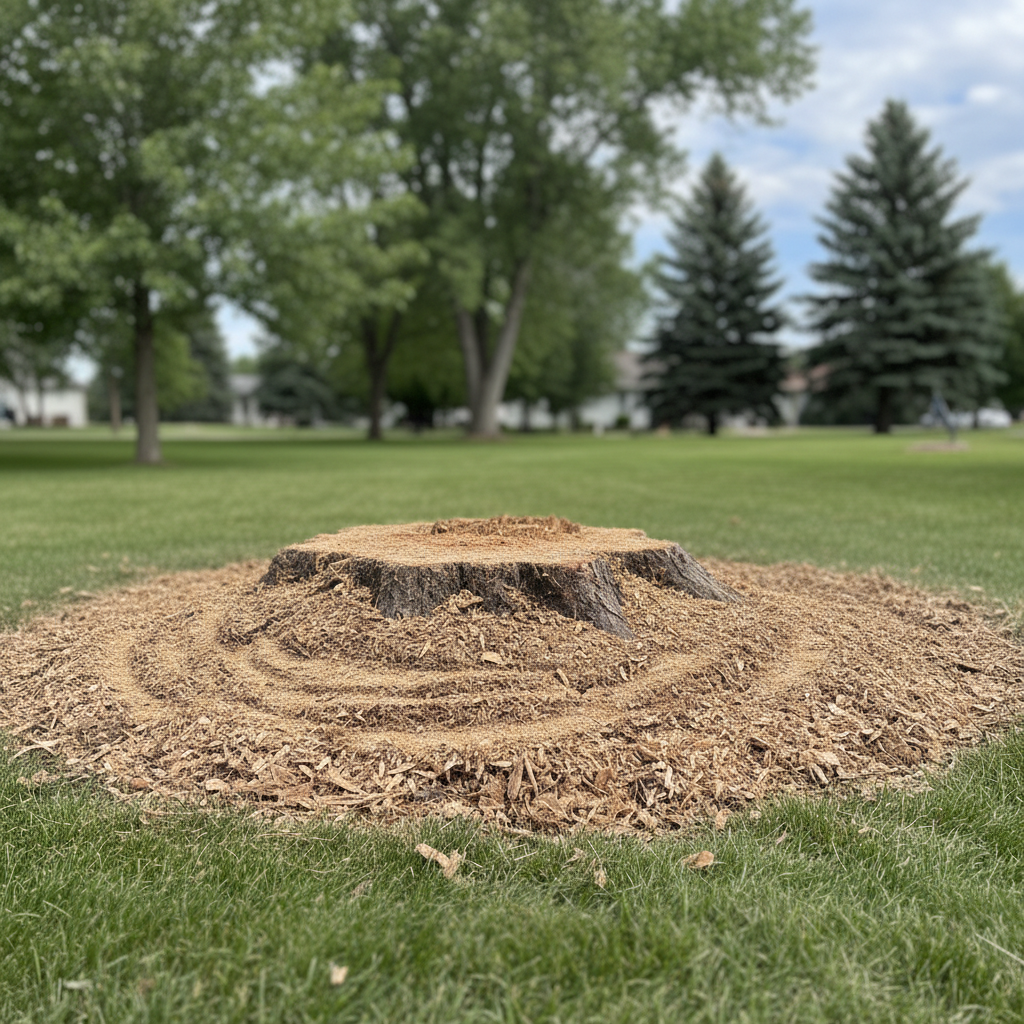
So, you've had a tree taken down, maybe it was an old cottonwood that got too big for its britches, or a pine that didn't make it through one of our harsh Laurel winters. Now you're staring at that ugly stump, wondering what to do with it. Stump grinding and removal, that's the next step. But what does that really mean for you?
Before You Start: Assess the Situation
First off, don't just grab a shovel and start hacking. You need to look at a few things before you decide your next move.
- Size Matters: How big is this stump? We're talking diameter here. A small, fresh stump from a sapling is a whole different beast than a 3-foot wide, decades-old elm stump. If it's bigger than, say, 12-18 inches across, you're probably leaning towards professional help unless you're really committed and have the right gear.
- Root System: Some trees have shallow, widespread roots. Others go deep. You won't know exactly until you start digging, but if it was a big tree, assume there's a substantial root system you'll need to deal with.
- Location, Location, Location: Is the stump right next to your house? Near underground utilities like water lines, gas lines, or sprinkler systems? This is a huge factor. Digging or grinding near utilities is risky business, and you absolutely need to know what's down there. Call 811 before you dig, always. It's free, and it can save you from a major catastrophe.
- Your Own Capabilities: Are you physically up to a lot of heavy digging, chopping, or operating machinery? Be honest with yourself. This isn't a light afternoon project for most larger stumps.
DIY Stump Removal: When It's Possible (and When It's Not)
For smaller stumps, say less than 12 inches, and if they're not too close to anything important, you've got a few DIY options:
- Digging it Out: This is brute force. You'll need a good shovel, a mattock, and maybe a pry bar. Dig around the stump, exposing as many roots as you can. Chop through them with an axe or a root saw. It's slow, hard work, and you'll likely still leave a good chunk of root behind. This is best for smaller, shallower stumps.
- Chemical Removal: There are products designed to accelerate the decomposition of stumps. You drill holes in the stump, pour in the chemical, and then wait. And wait. It can take months, even a year or more, for the stump to rot enough to be easily broken up. It's low effort but requires a lot of patience. This won't give you immediate results for planting or landscaping.
- Burning: This is generally not recommended for homeowners. It's dangerous, can be hard to control, and can smolder underground for a long time, posing a fire risk. Plus, in dry Montana summers, fire restrictions are common, and you absolutely do not want to be the cause of a wildfire. Just don't.
Now, for anything bigger, or if you want that stump gone fast and clean, you're looking at professional stump grinding.
Professional Stump Grinding: The Smart Choice for Most
This is where folks like us at Laurel Tree Solutions come in. We use specialized equipment called a stump grinder. It's essentially a powerful machine with a large, rotating cutting wheel that grinds the stump into wood chips.
What a Pro Does:
- Efficiency: A professional grinder can take out a large stump in a fraction of the time it would take you to dig.
- Depth: Grinders can go anywhere from 6 to 18 inches below ground level, effectively removing the visible stump and the top portion of the root ball. This leaves you with a clean area for new grass, planting, or even construction.
- Safety: These machines are powerful and dangerous if not operated correctly. Pros have the training, experience, and safety gear to do the job right without damaging property or injuring themselves.
- Cleanup: We'll typically leave you with a pile of wood chips mixed with soil. You can use these chips as mulch, or we can haul them away for you.
After the Grinding: What to Expect
Once the stump is gone, you'll have a hole filled with wood chips and soil. Here's what you need to do:
- Fill the Hole: You'll want to remove most of the wood chips from the hole. They'll decompose slowly and can cause the ground to sink later. Fill the hole with good quality topsoil.
- Planting: If you're planting new grass, spread your topsoil, level it, and seed or lay sod. If you're putting in a new tree or shrub, make sure you've got enough fresh soil for it to thrive.
- Settling: The ground might settle a bit over the next few weeks or months, especially after a good rain or a Laurel spring thaw. You might need to add a little more soil to keep it level.
Look, getting rid of a stump isn't rocket science, but it's often more work than people anticipate. For most homeowners, especially with larger stumps or those in tricky spots, calling in a professional for stump grinding is the safest, most efficient, and ultimately, the best way to reclaim your yard. Don't hesitate to reach out if you've got questions about a stump on your property. We're here to help.